

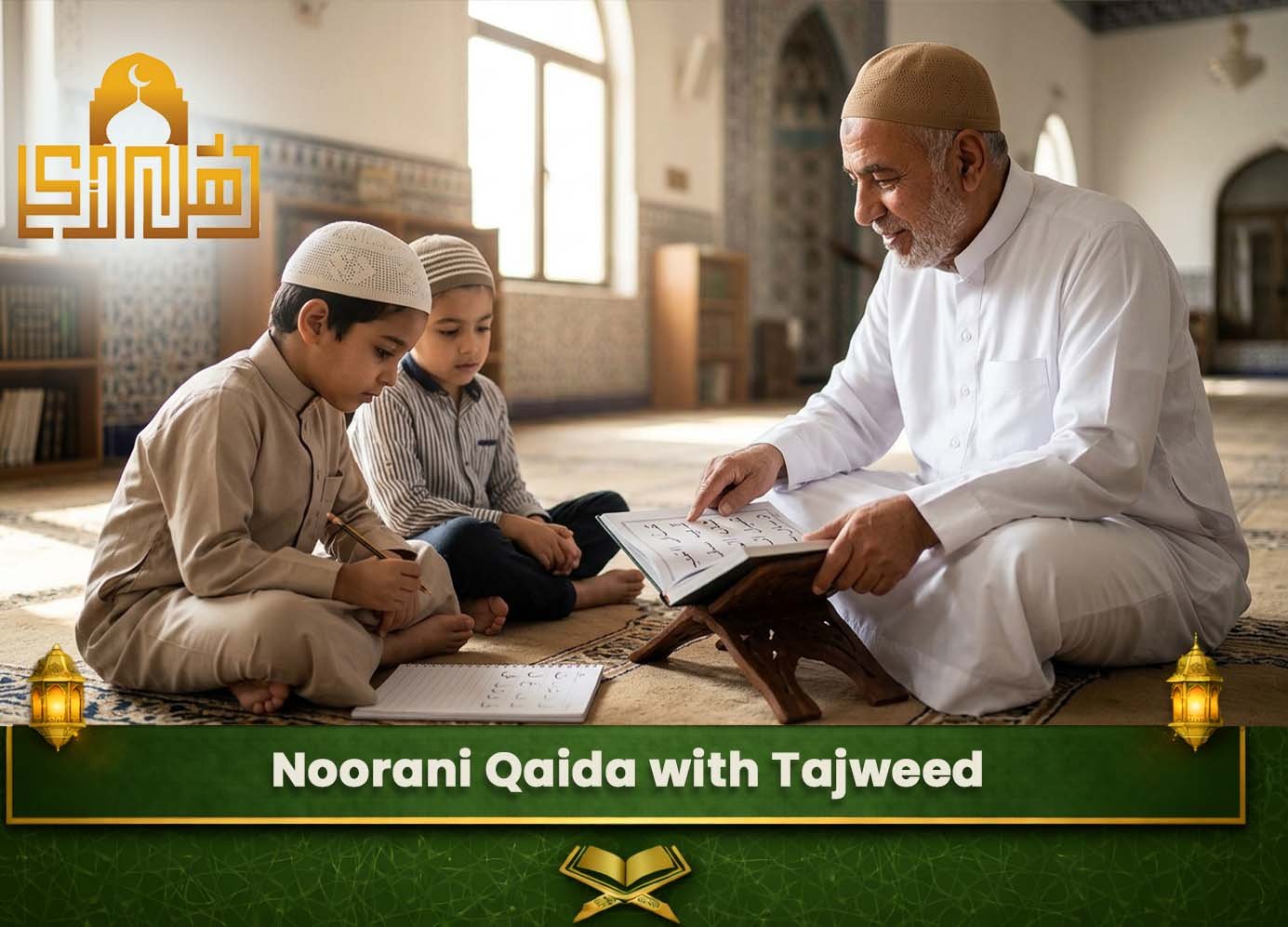
Noorani Qaida with Tajweed | Start Quran Reading
Noorani Qaida with Tajweed is a foundational method for learning to recite the Holy Quran correctly, especially for beginners and children. Ahl Alzekr Quran Academy for Kids offers a structured and gradual approach to learning Arabic letters, their articulation points, and Tajweed rules. This method helps build a correct and confident recitation style from the beginning.
Learning Quran recitation is a meaningful journey for every Muslim. It is the first step toward understanding the divine message. A structured system helps learners avoid pronunciation mistakes and build strong, accurate recitation habits.
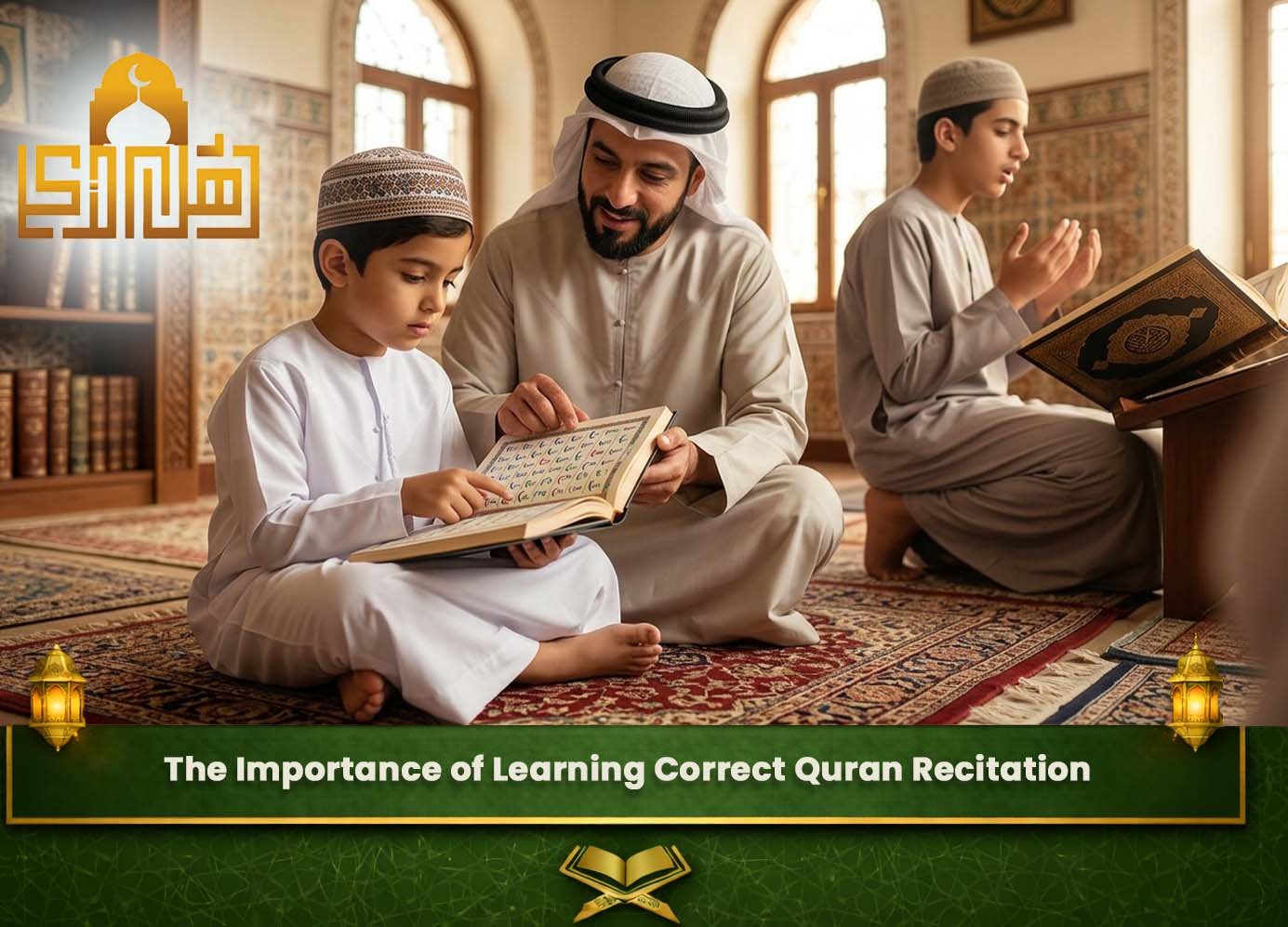
The Importance of Learning Correct Quran Recitation
Noorani Qaida with Tajweed
Correct Quran recitation is not simply a linguistic skill; it is an act of worship that requires precision and care. Every letter in the Quran has a specific sound, and even a small mistake can change the meaning of a word. For this reason, learners must begin their journey with a strong foundation in pronunciation and articulation.
The Arabic language has unique sounds that do not exist in many other languages, which makes learning more challenging for non-Arabic speakers. Some letters are pronounced deep in the throat, while others require nasal sound or specific tongue placement. Without guided learning, these details are often missed.
A proper learning method ensures that students develop awareness of:
- Correct pronunciation of Arabic letters
- Understanding of articulation points (Makharij)
- Awareness of short and long vowel sounds
- Application of Tajweed rules during recitation
This structured approach helps learners avoid common mistakes and builds confidence in reading the Quran fluently and accurately.
Online Quran Academy
Online Quran Academy offers a flexible and effective way for students to learn the Holy Quran from anywhere in the world. It provides structured lessons, qualified teachers, and a supportive learning environment that helps students improve their recitation, Tajweed, and memorization skills step by step.
Ahl Alzekr Quran Academy for Kids focuses on delivering high-quality online Quran education for children and beginners, helping them build strong reading foundations, develop correct pronunciation, and gain confidence in Quran recitation through simple and interactive learning methods.

Noorani Qaida with Tajweed
What Is the Structured Approach to Teaching Tajweed?
The structured approach to teaching Quran recitation focuses on step-by-step learning. Instead of overwhelming the student with complex rules from the beginning, it introduces concepts gradually.
Students start with:
- Recognizing Arabic letters individually
- Learning how each letter sounds
- Combining letters into simple syllables
- Understanding vowel marks (Fatha, Kasra, Damma)
- Practicing pronunciation with repetition
As they progress, they begin to learn more advanced rules such as:
- Noon Sakinah and Tanween rules
- Meem Sakinah rules
- Madd (elongation) rules
- Rules of merging and hiding sounds
This gradual system allows learners to develop strong reading skills without confusion or pressure. It also ensures long-term retention because each stage builds on the previous one.
Core Tajweed Rules Every Learner Must Understand
Tajweed rules are essential for accurate Quran recitation. They ensure that every letter is pronounced correctly according to its linguistic and phonetic rules. Some of the most important rules include:
1. Ikhfa (Hiding Sound)
This rule applies when Noon Sakinah or Tanween is followed by certain letters. The sound is partially hidden with a nasal tone.
2. Idgham (Merging)
Two letters are merged into one sound, sometimes with nasalization depending on the letters involved.
3. Iqlab (Conversion)
The Noon sound is converted into a Meem sound when followed by the letter Baa.
4. Idhar (Clear Pronunciation)
Letters are pronounced clearly without merging or nasalization when followed by throat letters.
5. Madd (Elongation)
Certain letters are extended for a specific number of counts depending on the rule applied.
6. Rules of Meem and Noon with Shaddah
These require strong nasal sound and clear emphasis.
These rules are not optional; they are essential for preserving the meaning and beauty of the Quranic text.
Why Correct Quran Recitation Matters
Correct recitation of the Quran carries deep importance in Islam. Every letter in the Quran has a precise sound and position. Even a small change in pronunciation can affect the meaning of a word. Therefore, accuracy becomes essential, not optional.
Moreover, the Arabic language contains unique sounds that many learners do not use in daily life. For example, some letters come from the throat, while others require nasal sound or tongue control. Because of this complexity, beginners need guided training instead of random reading.
When learners follow a proper method, they:
- Pronounce Arabic letters correctly
- Understand how sounds change in words
- Apply tajweed rules naturally
- Build confidence in reading
In addition, they reduce mistakes that may affect meaning or fluency.
What Is Learn Noorani Qaida?
Learn Noorani Qaida is a structured learning method that teaches beginners how to read Arabic and recite the Quran correctly. It starts from the very basics and gradually builds advanced skills. Therefore, it suits children, adults, and non-Arabic speakers.
This method focuses on clear steps. First, students learn individual letters. Then, they move to letter combinations. After that, they practice vowels and pronunciation rules. Finally, they read full Quranic words and sentences.
Scholars designed this method to simplify Quran learning. One of the well-known contributors to this system is Sheikh Noor Muhammad Haqqani (may Allah have mercy on him), who organized lessons in a clear and easy structure. As a result, millions of students around the world now use this approach to learn Quran recitation.
How Learn Noorani Qaida Builds Strong Recitation Skills
This method improves Quran recitation because it focuses on gradual learning. Instead of overwhelming the student, it introduces one concept at a time. Therefore, learners understand each rule before moving forward.
The learning process includes:
- Recognizing Arabic letters clearly
- Practicing correct pronunciation repeatedly
- Learning short and long vowel sounds
- Understanding how letters connect in words
- Applying pronunciation rules step by step
As students practice regularly, they train their tongue and ears to recognize correct sounds. Over time, they gain fluency and accuracy in reading.
Furthermore, repetition plays a strong role. When learners repeat sounds daily, they remember them more easily and pronounce them correctly without effort.
Importance of Tajweed in Learn Noorani Qaida
Tajweed forms the foundation of correct Quran recitation. It ensures that every letter receives its proper sound, timing, and articulation. Without tajweed quran online, reading the Quran may lead to mistakes in meaning or pronunciation.
Learn Noorani Qaida introduces tajweed rules explained in a simple and gradual way. Instead of teaching all rules at once, it breaks them into small lessons.
Some important learn quran online with tajweed include:
- Makharij (articulation points): where each letter comes from
- Noon Sakinah rules: rules of nasal sounds
- Meem Sakinah rules: pronunciation of the letter Meem
- Madd rules: elongation of sounds
- Idgham, Ikhfa, and Izhar: different pronunciation styles
Because of this step-by-step approach, learners understand rules easily and apply them naturally while reading.
Step-by-Step Learning Journey
The learning journey in Noorani Qaida follows a clear structure. Each stage builds on the previous one. This method helps learners avoid confusion and ensures steady progress.
1. Learning Arabic Letters
Students begin by recognizing each Arabic letter and its sound. They repeat each letter until they pronounce it correctly.
2. Letter Combinations
Next, they learn how letters connect to form simple syllables and words.
3. Short Vowels
Students practice Fatha, Kasra, and Damma. These vowels help them read basic words.
4. Tanween and Sukoon
At this stage, learners understand word endings and pauses in pronunciation.
5. Shaddah (Emphasis)
Students learn how to double letters correctly and emphasize sounds.
6. Advanced Tajweed Rules
Finally, learners study rules like Ikhfa, Idgham, and Madd in detail.
Because of this structure, students move from simple to complex learning without stress.
Why Beginners Need Learn Noorani Qaida
Beginners often feel confused when they try to read the Quran without guidance. Arabic letters change shape depending on their position in a word, which makes reading difficult.
Therefore, Learn Noorani Qaida becomes very important. It helps learners:
- Build confidence from the beginning
- Avoid long-term reading mistakes
- Learn correct pronunciation early
- Understand Arabic sounds step by step
In addition, it creates a strong base for future Quran studies.
Common Challenges in Quran Learning
Many learners face similar challenges when starting Quran recitation. These challenges include:
- Confusing similar Arabic letters
- Mispronouncing throat sounds
- Ignoring vowel length rules
- Making pauses in wrong places
However, structured learning solves these problems. When students follow guided lessons, they correct mistakes early. As a result, they develop proper habits that last long-term.
Learn Noorani Qaida in the Modern World
Today, learning Quran recitation has become easier than ever. Technology allows students to learn from anywhere in the world. They no longer need to attend physical classes only.
Online learning offers several benefits:
- Flexible study schedules
- Access to qualified teachers
- One-on-one learning support
- Comfortable home learning environment
Because of these advantages, many students now prefer online Quran education.
Why Noorani Qaida Is Effective for Quran Learning
Noorani Qaida with Tajweed
The success of Noorani Qaida at Ahl Alzekr Quran Academy for Kids comes from its simple and structured design. It does not rush learners; instead, it builds knowledge step by step, allowing students to understand each concept clearly before moving forward.
In addition, the method combines theory and practice. Learners do not only memorize rules, but they also apply them immediately while reading. This active learning approach improves retention, accuracy, and confidence in Quran recitation.
As a result, students develop strong foundational skills in Arabic pronunciation and quran tajweed online lessons, which helps them read the Holy Quran fluently and correctly over time.
Frequently Asked Questions
section helps learners understand common questions about Noorani Qaida with Tajweed and the learning process at Ahl Alzekr Quran Academy for Kids.
Can beginners learn Quran recitation without prior Arabic knowledge?
Yes, beginners can start from scratch because the learning system is designed to teach Arabic letters and pronunciation step by step.
How long does it take to learn proper recitation?
The time varies depending on consistency, but noticeable improvement usually appears within a few weeks of regular practice.
Is this method suitable for children?
Yes, it is highly suitable for children because it uses gradual learning and repetition, making it easy to understand and remember.
In conclusion, Noorani Qaida with Tajweed is a foundational method for learning to recite the Holy Quran correctly, especially for beginners and children. Ahl Alzekr Quran Academy for Kids offers a structured and gradual approach to learning Arabic letters, their articulation points, and Tajweed rules explained. This method helps build a correct and confident recitation style from the beginning.
Learning Quran recitation is a meaningful journey for every Muslim. It is the first step toward understanding the divine message. A structured system helps learners avoid pronunciation mistakes and build strong, accurate recitation habits.