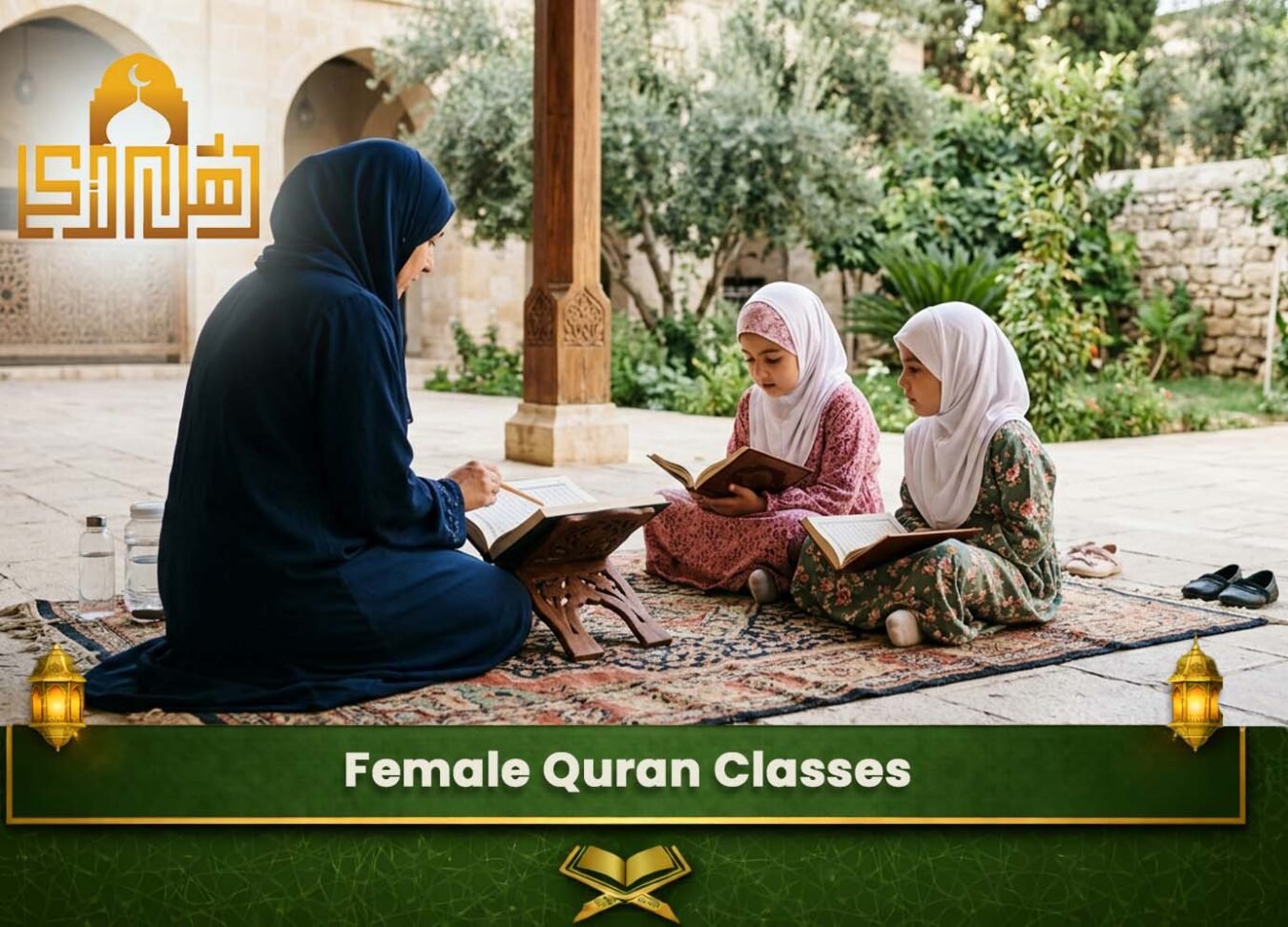
Mastering tajweed rules is essential for anyone who wishes to recite the Quran accurately and beautifully. With consistent practice, guidance from qualified teachers, and the right tools, learners can improve their pronunciation, rhythm, and overall recitation.
Online Quran Academy Ahl Alzekr provides structured lessons, exercises, and personalized feedback to help students apply tajweed rules effectively. By dedicating time and effort, every learner can achieve fluency, clarity, and confidence in their Quranic recitation.
Why does the Quran include tajweed?

Tajweed Rules
The use of tajweed rules in the Quran was not arbitrary. When Islam began spreading and non-Arabs embraced the faith, it became essential to create guidelines that would distinguish letters clearly. These rules ensured that every word of the Quran could be pronounced correctly, preserving its original meaning.
Today, mastering tajweed rules is just as important. They help all believers, regardless of their native language, to recite the Quran accurately. Even Arabic speakers benefit from learning tajweed because many modern Arabic dialects differ from the classical Arabic used in the Quran. Without proper guidance, pronunciation errors could change the meaning of the verses.
Platforms like Online Quran Academy Ahl Alzekr make learning these rules accessible and practical. Through online lessons, students can study tajweed at their own pace while receiving personalized feedback from qualified instructors. By applying these rules, they can recite the Quran just as our beloved Prophet ﷺ did.
Ultimately, learning tajweed connects readers more deeply with the Quran. Using resources such as Online Quran Academy Ahl Alzekr ensures that the beauty and precision of the Quran’s recitation are preserved for everyone, helping learners of all backgrounds experience its true spiritual impact.
Online Quran Academy
At Online Quran Academy Ahl Alzekr, students can learn the Quran from the comfort of their home. The academy offers structured lessons on tajweed rules, recitation techniques, and memorization strategies.
Expert teachers provide personalized guidance, correct pronunciation, and feedback to ensure learners follow all tajweed rules accurately.
With interactive sessions, listening exercises, and regular practice, Online Quran Academy Ahl Alzekr helps students of all levels improve their fluency, clarity, and confidence in Quranic recitation.

Tajweed Rules
What Does Tajweed Literally Mean?
The word “tajweed” literally means “perfection,” “enhancement,” or “beautification.” It refers to a set of rules that guide us in reciting the Quran correctly. These tajweed rules help pronounce each letter clearly and produce a beautiful, harmonious sound.
Learning tajweed is more than following rules. It allows the Quran’s words to resonate fully while keeping their intended meaning. Even Arabic speakers benefit from it, because modern dialects often differ from classical Quranic Arabic.
Many students use Online Quran Academy Ahl Alzekr to learn these rules. The academy provides clear online lessons and personalized guidance. Students can practice regularly and master tajweed, reciting the Quran as our beloved Prophet ﷺ did.
By applying tajweed rules, learners can recite the Quran smoothly and melodiously. This improves both understanding and spiritual connection. Online Quran Academy Ahl Alzekr makes it easy for everyone, regardless of age or background, to read the Quran beautifully and confidently.
Tajweed Rules and Their Importance
Tajweed rules are a set of guidelines that help us recite the Quran correctly. They ensure that every letter is pronounced accurately and clearly. These rules cover how to pronounce letters, when to elongate or shorten sounds, and many other important details.
Reciting the Quran with tajweed is a Sunnah. The Prophet ﷺ said: “Whoever recites the Quran with fluency, beauty, and perfection will be in the company of noble angels. Whoever struggles or stumbles over its verses will still receive multiplied reward.” (Sahih al-Bukhari)
Using tajweed rules does more than improve pronunciation. It also helps us understand the true meaning of the verses. Mispronouncing a word can change the meaning and lead to misunderstanding.
Many learners today turn to Online Quran Academy Ahl Alzekr to study these rules. The academy provides easy-to-follow online lessons and personalized guidance. Students can practice regularly and recite the Quran smoothly, beautifully, and confidently, following the exact way of our beloved Prophet ﷺ.
Applying these rules ensures both accuracy and spiritual connection, making the Quran’s recitation a more meaningful experience.
Understanding Noon Sakinah and Tanween
Learning the Quran correctly requires understanding the fundamental tajweed rules, especially Nun Sakinah and Tanzeen. At Online Quran Academy Ahl Alzekr, teachers help students apply these rules so they can recite the Quran clearly and confidently.
Nun Sakinah occurs when the letter “ن” carries a sukoon, meaning no vowel follows it. When reciting, the reader must pause completely on this letter to maintain accuracy. Meanwhile, Tanzeen is a grammatical marker added to the end of a noun to show that it is indefinite, similar to “a” or “an” in English. Using Tanzeen correctly prevents mistakes that can change a word’s meaning.
Tanzeen has three types: Tanzeen al-Fatha (ً) pronounced as “’an,” Tanzeen al-Kasra (ٍ) pronounced as “’in,” and Tanzeen al-Damma (ٌ) pronounced as “’un.” Each type affects pronunciation, so students practice them carefully during recitation.
At Online Quran Academy Ahl Alzekr, learners practice these tajweed rules with repetition, listening exercises, and guidance from qualified instructors. These methods allow students to improve both accuracy and fluency. By mastering tajweed rules, anyone can recite the Quran beautifully and with confidence.
Izhar: Essential Tajweed Rules
Izhar in tajweed rules means clarity or transparency in pronunciation. It is an essential rule in Quranic recitation and often applies to certain cases to make the reading more precise and elegant. Correctly applying Izhar ensures that every sound is clear and accurate.
How do you pronounce Izhar? When a specific letter follows the sound, the previous sound is pronounced clearly without nasalization. This technique improves both clarity and beauty in Quran recitation.
At Online Quran Academy Ahl Alzekr, students learn when Izhar applies and practice it through guided repetition and listening exercises. Teachers focus on clear articulation so that each sound follows tajweed rules perfectly.
By mastering Izhar along with other tajweed rules, learners can recite the Quran with confidence, accuracy, and elegance. Practicing regularly at Online Quran Academy Ahl Alzekr helps reciters develop skill, fluency, and a more beautiful reading experience.
Understanding Idgham in Tajweed: Smooth Quran Recitation
Idgham in tajweed rules means merging or blending. It occurs when the sound of a Nun Sakinah or Tanween is followed by certain letters, causing the first sound to merge with the next. This rule makes recitation smoother and more harmonious.
The letters that trigger Idgham include n, m, y, w, r, and l. When Idgham happens, the sound of the Nun Sakinah or Tanween blends into the following letter, which is pronounced with emphasis (shadda). This merging improves the fluency and beauty of Quranic recitation.
There are two main types of Idgham: Idgham with nasalization (ghunnah) and Idgham without nasalization. Each type requires careful practice to ensure correct pronunciation.
At Online Quran Academy Ahl Alzekr, students learn to recognize Idgham and practice it through guided exercises and listening sessions. Teachers provide clear instruction so that each sound follows the correct tajweed rules.
By mastering Idgham along with other tajweed rules, learners can recite the Quran with clarity, confidence, and elegance. Regular practice at Online Quran Academy Ahl Alzekr ensures that students develop both skill and fluency in their Quranic reading.
Understanding Iqlab in Tajweed: Correct Quranic Pronunciation
Iqlab in tajweed rules refers to changing the sound of a Nun Sakinah or Tanween into the sound of the letter “M” when it is followed by the letter “B.” This change occurs naturally to ensure smooth and accurate recitation.
When practicing Iqlab, the sound of Nun Sakinah or Tanween transforms into “M” before “B,” creating a clear and fluent pronunciation. Applying this rule correctly enhances both the beauty and precision of Quranic recitation.
At Online Quran Academy Ahl Alzekr, students learn how to recognize Iqlab and practice it with guidance and listening exercises. Teachers focus on clear articulation so that every recitation follows tajweed rules accurately.
By mastering Iqlab along with other tajweed rules, learners can recite the Quran confidently, with both clarity and elegance. Consistent practice at Online Quran Academy Ahl Alzekr helps students improve their skill, fluency, and overall recitation quality.
Understanding Ikhfa in Tajweed: Subtle Quranic Pronunciation
Ikhfa in tajweed rules means hiding or partially concealing the sound. It applies to a Nun Sakinah or Tanween when followed by certain letters, after excluding cases for Izhar, Idgham, and Iqlab.
When Ikhfa occurs, the sound of the Nun Sakinah or Tanween is pronounced softly and partially, without a complete pause. This subtle pronunciation adds smoothness and beauty to Quranic recitation.
At Online Quran Academy Ahl Alzekr, students practice Ikhfa through guided exercises and listening sessions. Teachers emphasize proper articulation to ensure that each sound follows tajweed rules accurately.
By mastering Ikhfa along with other tajweed rules, learners can recite the Quran with elegance, clarity, and confidence. Regular practice at Online Quran Academy Ahl Alzekr helps students improve both fluency and overall recitation quality.
Understanding Shaddah on Nun and Meem in Tajweed
Shaddah in tajweed rules indicates doubling a letter. When applied to Nun or Meem, it requires pronouncing the letter twice while slightly extending the nasal sound (ghunnah).
A doubled Nun is pronounced clearly two times with a gentle elongation, and a doubled Meem follows the same pattern. This technique enhances the beauty of recitation and highlights the nasal sound, making the Quranic recitation more expressive and melodious.
At Online Quran Academy Ahl Alzekr, students learn how to recognize and practice Shaddah on Nun and Meem. Through guided exercises and listening practice, teachers ensure that each sound follows tajweed rules accurately.
By mastering Shaddah along with other tajweed rules, learners can recite the Quran with clarity, elegance, and confidence. Regular practice at Online Quran Academy Ahl Alzekr helps students improve both fluency and overall recitation quality.
Qalqalah: Vibrant Quranic Recitation
Qalqalah occurs when a letter carries a sukoon, specifically the letters Q, T, B, J, or D. This rule creates a bouncing or echoing sound, adding rhythm and musicality to Quranic recitation.
When Qalqalah appears in the middle of a word, the echo is light, while at the end of a word, the sound becomes stronger and more pronounced. Correct application of this rule makes the recitation lively and melodious.
At Online Quran Academy Ahl Alzekr, students practice Qalqalah through guided exercises and listening sessions. Teachers focus on proper pronunciation to ensure every sound follows the rules of tajweed accurately.
By mastering Qalqalah along with other recitation rules, learners can recite the Quran with clarity, elegance, and confidence. Regular practice at Online Quran Academy Ahl Alzekr helps students improve both fluency and the overall beauty of their recitation.
Understanding Madd in Tajweed: Extending Quranic Sounds
Madd in tajweed rules refers to extending the sound of certain letters (A, W, Y) in specific contexts. Correct application of Madd enhances the beauty, rhythm, and flow of Quranic recitation.
There are two main types of Madd:
- Natural Madd occurs when a consonant is followed by a Madd letter.
- Secondary Madd happens when a Madd letter is followed by a Hamzah or a sukoon.
At Online Quran Academy Ahl Alzekr, students practice Madd through guided exercises and listening sessions. Teachers focus on correct timing and pronunciation to ensure that every Madd follows tajweed rules accurately.
By mastering Madd along with other tajweed rules, learners can recite the Quran with elegance, clarity, and confidence. Regular practice at Online Quran Academy Ahl Alzekr helps students improve both fluency and the overall beauty of their recitation.
Types of Madd in Tajweed: Perfecting Quranic Recitation
In tajweed rules, Madd can take several forms, each affecting the length of pronunciation to enhance clarity and rhythm.
- Two-Beat Madd: The natural extension of a Madd letter, typically twice the length of a short vowel.
- Flexible Madd: Applies to semi-vowels (W, Y) at the end of a word, allowing extension of 2, 4, or 6 counts depending on stopping.
- Four-Beat Madd: Occurs when a Hamzah follows a Madd letter, either in the same word or in the next word.
- Six-Beat Madd: Usually occurs when a Madd letter is followed by a sukoon and is known as the mandatory Madd.
At Online Quran Academy Ahl Alzekr, students learn to identify and practice each type of Madd correctly. Teachers provide exercises and listening sessions to ensure that every Madd follows tajweed rules precisely.
By mastering all types of Madd along with other tajweed rules, learners can recite the Quran with elegance, clarity, and confidence. Regular practice at Online Quran Academy Ahl Alzekr improves both fluency and the overall beauty of recitation.
Mastering Meem Sakinah in Tajweed Rules
Meem Sakinah in tajweed rules follows three important rules that guide its pronunciation during Quranic recitation.
- Idgham Shafawi (Merging): When a Meem Sakinah comes before another Meem, reciters merge the sounds and extend the nasal sound (ghunnah) for a smooth and clear effect.
- Ikhfa Shafawi (Concealing): When a Meem Sakinah appears before the letter B, readers partially hide the sound while maintaining a gentle nasal tone.
- Izhar Shafawi (Clear Pronunciation): When a Meem Sakinah is followed by any other letter, reciters pronounce it clearly with a slight nasal sound.
At Online Quran Academy Ahl Alzekr, teachers guide students through exercises and listening practice. They show learners how to pronounce every Meem Sakinah correctly according to tajweed rules, ensuring accuracy and fluency.
By practicing Meem Sakinah along with other tajweed rules, learners can recite the Quran confidently, clearly, and beautifully. Regular practice at Online Quran Academy Ahl Alzekr helps students improve both skill and recitation quality.
Tajweed Symbols in the Quran: A Simple Guide
Understanding tajweed rules also involves learning the symbols used in the Quran. These symbols guide proper pronunciation, pauses, and recitation flow.
- Sukoon (ْ) indicates a complete stop on a letter.
- Shaddah (ّ) signals doubling the letter sound.
- Madd (~) shows that a letter should be prolonged.
- Tanzeen (ً, ٍ, ٌ) adds a silent “n” sound at the end of a word.
- Hamzah (ء) indicates a short vocal pause.
- Meem Sakinah and Nun Sakinah follow rules such as Izhar, Idgham, or Ikhfa depending on the context.
- Pause symbols: Recommended stop, permissible stop, mandatory stop, and others help guide proper recitation.
- Sajdah (۩) marks a verse requiring prostration during recitation.
At Online Quran Academy Ahl Alzekr, students learn to recognize these symbols and practice them under expert guidance. Teachers ensure that every recitation follows tajweed rules accurately.
By mastering Quranic symbols along with other tajweed rules, learners can recite the Quran with clarity, accuracy, and elegance. Regular practice at Online Quran Academy Ahl Alzekr improves both skill and overall recitation quality.
How to Memorize Tajweed Rules Effectively

Tajweed Rules
Learning tajweed rules requires consistent practice and the right guidance. Here are some effective methods:
- Learning from a Teacher: The best way to learn is under the supervision of a certified Quran teacher who has mastered Arabic pronunciation and tajweed rules.
- Obtaining Certification (Ijazah): Students recite the entire Quran correctly under a teacher’s supervision to receive an Ijazah, a chain of certification linked to the Prophet ﷺ.
- Charts and Diagrams: Drawing tajweed symbols and practicing recitation regularly helps reinforce memory and understanding.
- Audio Recordings: Listening to recitations by qualified Qaris improves pronunciation, tone, and fluency.
- Online Groups and Communities: Joining tajweed study groups allows for practice, feedback, and motivation.
At Online Quran Academy Ahl Alzekr, students use these methods under expert guidance. Teachers provide structured lessons, exercises, and feedback to ensure that learners correctly apply tajweed rules in their recitation.
By following these strategies and practicing consistently, learners can memorize tajweed rules effectively and recite the Quran with confidence, clarity, and elegance. Regular practice at Online Quran Academy Ahl Alzekr strengthens both fluency and recitation quality.
Frequently Asked Questions About Tajweed Rules
This section answers the most common questions about Quranic recitation rules. Learners can clarify doubts and understand key concepts of tajweed effectively.
1. What are Tajweed Rules?
Tajweed rules are guidelines that ensure correct pronunciation of each letter in the Quran, making recitation accurate and melodious.
2. Why is it important to follow Tajweed Rules?
Following tajweed rules preserves the meaning of the Quran and enhances clarity, beauty, and spiritual impact in recitation.
3. How can I learn Tajweed Rules effectively?
You can learn through certified teachers, audio recordings, diagrams, and online groups. Online Quran Academy Ahl Alzekr provides structured lessons and expert guidance to help learners master tajweed rules efficiently.
4. Are Tajweed Rules only for Arabic speakers?
No. Anyone, regardless of their language, can learn tajweed rules and recite the Quran correctly with practice and guidance.
5. Can I practice Tajweed online?
Yes. Platforms like Online Quran Academy Ahl Alzekr offer live lessons, exercises, and feedback, allowing students to practice and apply tajweed rules from home.
In conclusion, mastering tajweed rules is essential for anyone seeking to recite the Quran accurately and beautifully. With regular practice, guidance from qualified teachers, and the right tools, learners can improve their pronunciation, rhythm, and overall recitation quality.
Online Quran Academy Ahl Alzekr provides structured lessons, practical exercises, and personalized feedback to help students apply tajweed rules effectively. With dedication and consistent effort, every learner can achieve fluency, clarity, and confidence in their Quranic recitation.
Learn also: